
Audiences see advertising almost everywhere, which makes genuine attention harder to earn. The most effective guerrilla marketing ideas interrupt that familiarity with something unexpected: an oversized object, an unusual installation or a temporary experience that changes how people see the space around them.
Guerrilla marketing can include public art, street-level activations, pop-ups, interactive displays and other unconventional formats. In this guide, the focus is on how inflatable art can use the same principles of surprise, scale and participation to create memorable real-world campaigns, with a few wider ideas included for context.
Guerrilla marketing is an unconventional approach designed to generate attention through creativity, surprise, environment and participation. Instead of relying only on media space that people already expect to see, the campaign uses its surroundings as part of the idea.
That does not automatically mean low-budget marketing. A guerrilla campaign can be a simple street-level intervention, but premium brands can also create highly produced installations, experiential spaces and custom-built physical objects. The common thread is that the idea feels unexpected in context.
A simple example would be taking a familiar product or character, recreating it at an unusual scale and positioning it where people would never normally expect to encounter it. The location, object and audience reaction all become part of the creative.
Strong guerrilla marketing creates a clear visual interruption. Unexpected scale, surprising placement and contrast with the surrounding environment can trigger curiosity before the audience has even processed the brand message.
The best campaigns are usually easy to understand. They give people something worth looking at, photographing or discussing, without requiring a lengthy explanation. Visual storytelling and simple participation can then extend the experience beyond the original location as people choose to take their own photos and share them.
That is why the strongest creative guerrilla marketing ideas tend to combine one memorable visual thought with a setting that makes the idea feel even more surprising.
These ideas use the same guerrilla principle in different ways: make the physical execution feel surprising in its setting and give people a clear reason to notice it.
Dramatically changing the scale of a recognisable object can alter how people perceive an otherwise familiar environment. A small everyday item becomes a landmark; a familiar character becomes an event feature; an animal or campaign motif becomes something people can spot from across a venue.
Scale works best when recognition is immediate. The audience should not have to work out what they are looking at before the idea lands. Giant custom inflatables can be useful here: the creative asset can become physically imposing while keeping the shape and visual cues that make it recognisable.
A recognisable product can become much more noticeable when it is recreated at an unusual scale or positioned somewhere it would never normally appear. The key is not simply to make the item large; placement should add something to the idea.
For product launches, outdoor activations, exhibitions, retail campaigns and promotional installations, custom inflatable replicas can translate packaging or product shapes into physical campaign assets. The strongest execution still asks why that product belongs in that particular place and what reaction the contrast should create.
A logo wall may document attendance, but it does not automatically create a photograph people want to take. A better photo opportunity gives visitors something unusual to stand beside, a striking background, a clear sense of scale or a physical element they can interact with.
Think about the composition from the visitor’s point of view. Where will people stand? What will appear behind them? Does the scene still make sense when viewed through a phone screen? When the physical installation is visually strong enough, photography becomes a natural part of the experience rather than a separate request from the brand.
Entrances, gateways and transition spaces are often treated as places to put signage. A more immersive approach is to turn the entrance itself into the campaign.
Themed gateways, sculptural entrances and walk-through installations can change the moment someone moves from one space into another. At festivals, exhibitions and brand experiences, bespoke event inflatables can create a large physical threshold that establishes the visual world before the audience reaches the main activation.
Some campaigns create more curiosity when the physical object works first as something interesting, unusual or artistic. A sculptural character, surreal object, oversized creature or abstract installation can attract attention before the audience reads a line of copy.
This is where branded physical experiences can borrow from public art. Rather than trying to make every surface promotional, the installation can carry the campaign through shape, colour, character and visual storytelling. Air Artists’ inflatable sculptures are all hand-painted, allowing the artwork and surface detail to be integral to the finished form rather than treated as an optional extra.
The surrounding environment can be as important as the installation itself. A strange object in an already theatrical environment may blend in; the same object in a familiar shopping centre, public-facing venue, forecourt or city setting can feel far more surprising.
Look for contrast. Ask what people normally expect to encounter in that location, then consider how the campaign could interrupt that expectation without making the space difficult to use. The everyday setting becomes part of the creative idea, helping a temporary installation feel more unusual because everything around it is so familiar.
Pop-ups can quickly become cluttered when signage, furniture, screens, products and activities all compete for attention. A stronger approach is to begin with one dominant visual thought and let the rest of the experience support it.
A central object or installation can establish the theme, while lighting, staff, furniture, products and activities reinforce the same direction. Bespoke custom inflatables can provide that visual anchor when the concept depends on a large character, object or sculptural form, but the same principle applies to many kinds of physical activation.
Festivals already have large, engaged audiences, but they also contain a huge amount of visual competition. Guerrilla-style thinking can help a brand create a landmark rather than another small branded zone.
Large characters, gathering points, immersive installations, unusual entrances and oversized campaign objects can all help define a location within a busy event. The most useful festival installations work with the surrounding programme rather than fighting it, giving people an easy visual reference and a reason to explore the activation.
Participation can make a physical campaign more memorable, particularly when the interaction is simple and intuitive. People might walk through an installation, stand beside it, enter a space, pose for a photograph or experience the same object from different perspectives.
The interaction should feel obvious rather than complicated for novelty’s sake. If visitors need lengthy instructions, the campaign may lose the immediacy that made it interesting in the first place. The strongest participatory ideas invite people in through the design itself.
Guerrilla marketing does not have to mean a single-use stunt. If a campaign is likely to travel between events, exhibitions, retail environments or different cities, reusability can become part of the brief from the beginning.
Think about transport, storage, adaptability and installation requirements as well as the first appearance. Lightweight physical structures can be particularly useful when the creative needs to make a large visual impact but still move between locations. Planning for repeat use also helps teams avoid designing an impressive asset that becomes impractical after launch day.
Creative impact matters, but the idea still has to work in the real environment. A few practical decisions made early can prevent the visual concept from becoming harder to execute later.
Start with the audience response. Should people stop and look, take a photograph, enter an experience, ask a question, visit a nearby activation, share something or simply remember the campaign later? The desired reaction gives the creative idea a job to do.
Footfall alone is not enough. Consider visibility, viewing distance, competing visuals, visitor movement, available space and access. A location that looks good in a deck may feel completely different when people, furniture, traffic or event infrastructure are added.
Physical activations may need discussion with venue operators, landowners, event organisers, suppliers or relevant local authorities where applicable. Build that into the timeline early rather than treating permissions as a final administrative step.
The creative concept should account for installation, equipment, access, power where required, weather where applicable, staffing, removal and storage. These are not separate from the idea; they determine how confidently it can be delivered in the real world.
Consider where people will stand, where the camera is likely to be and what appears behind the installation. Photography works best when it is part of the spatial design rather than an afterthought.
The ideas above are not only theoretical. Air Artists has used large-scale inflatables in very different campaign and event settings, from sports promotion and entertainment launches to exhibitions and touring productions.

Case Study 01
The FOX Sports case study shows how the oversized-landmark idea can translate into a sports campaign. Air Artists created giant hand-painted footballer replicas designed around scale, recognition and a highly shareable fan experience.
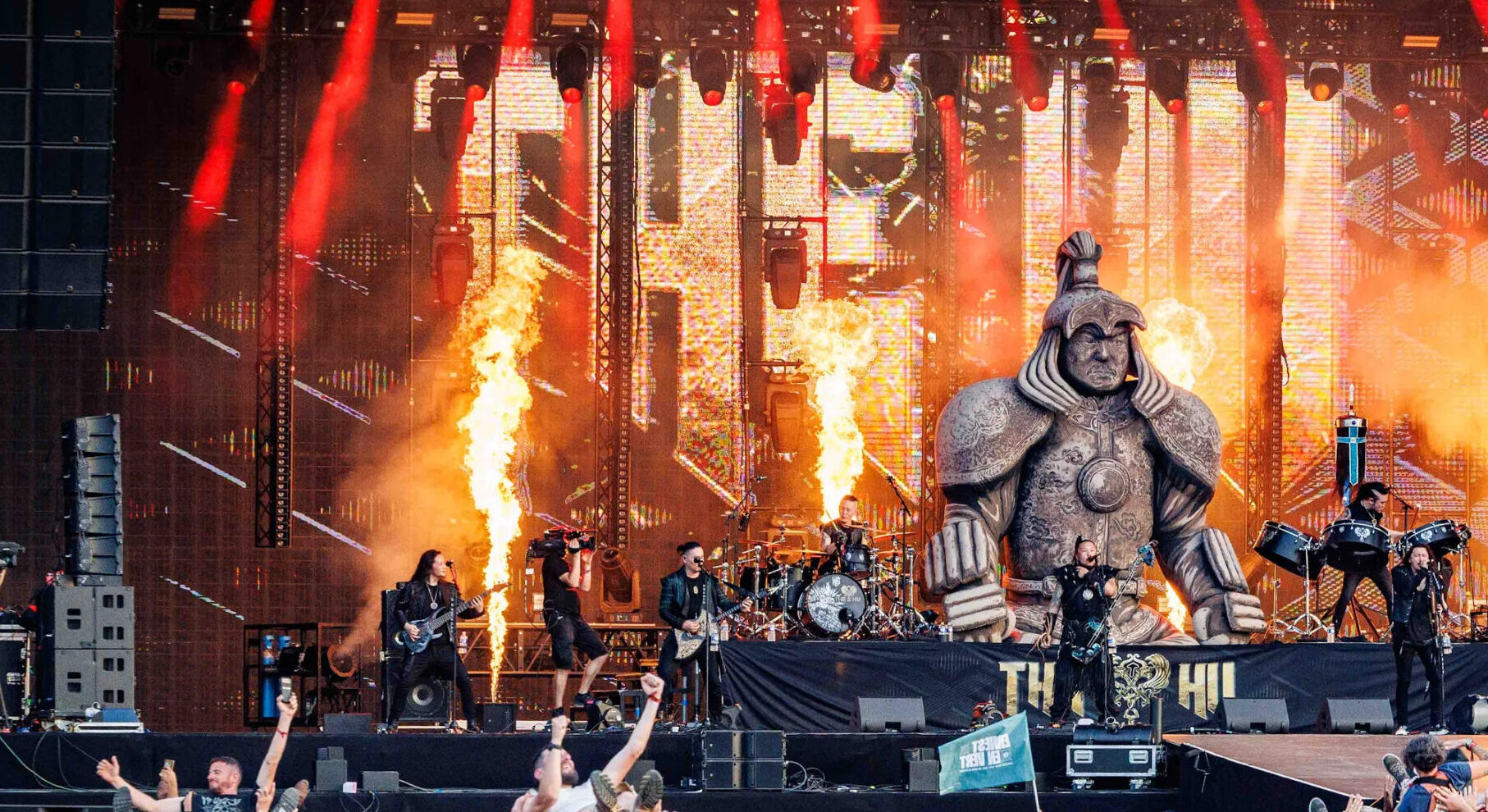
Case Study 02
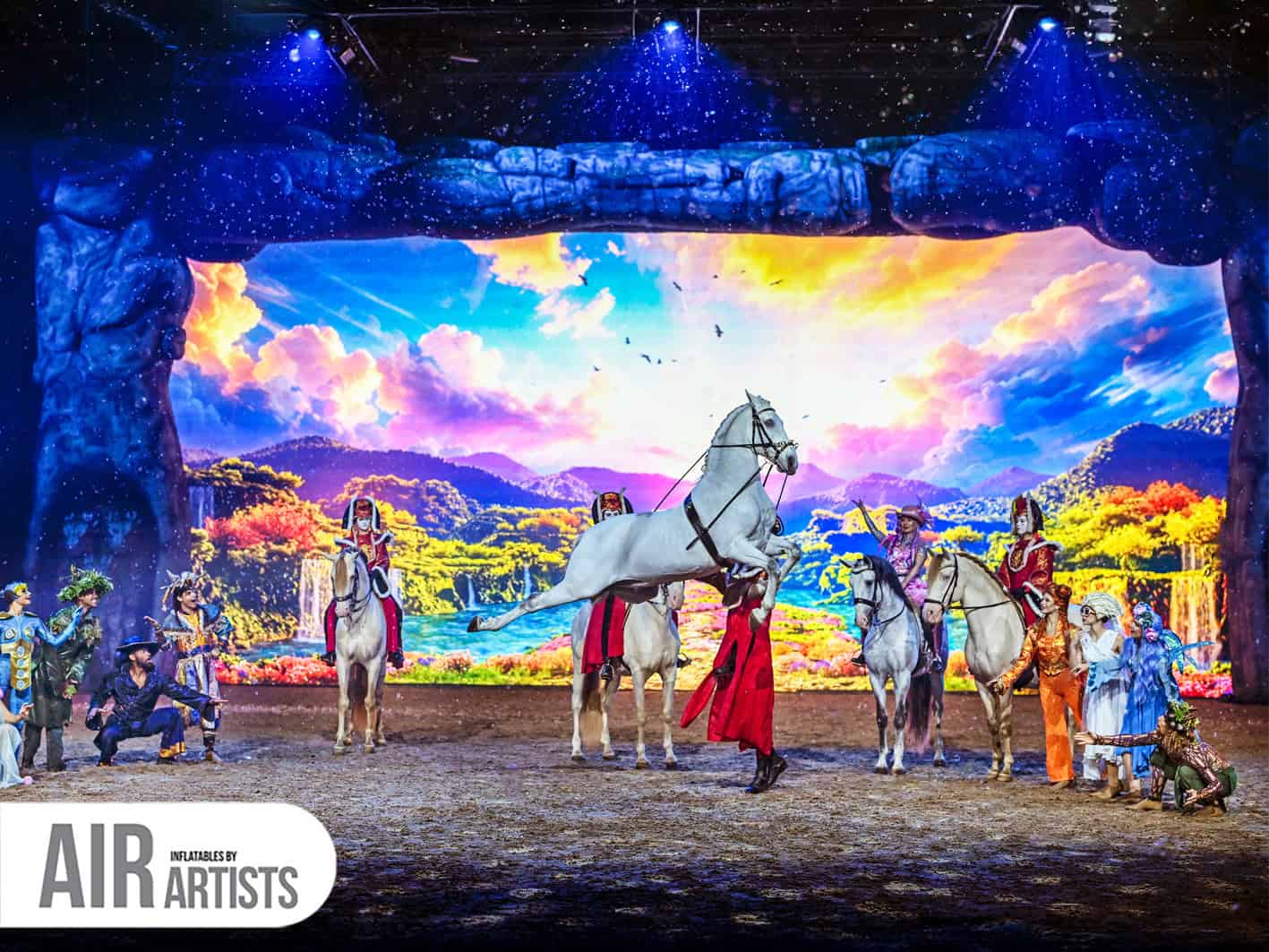
For CAVALLUNA, the inflatable became part of the audience journey rather than a standalone display. Air Artists created a hand-painted rock gateway designed for scale and presence, while also being practical enough to tour between venues.
Case Study 03
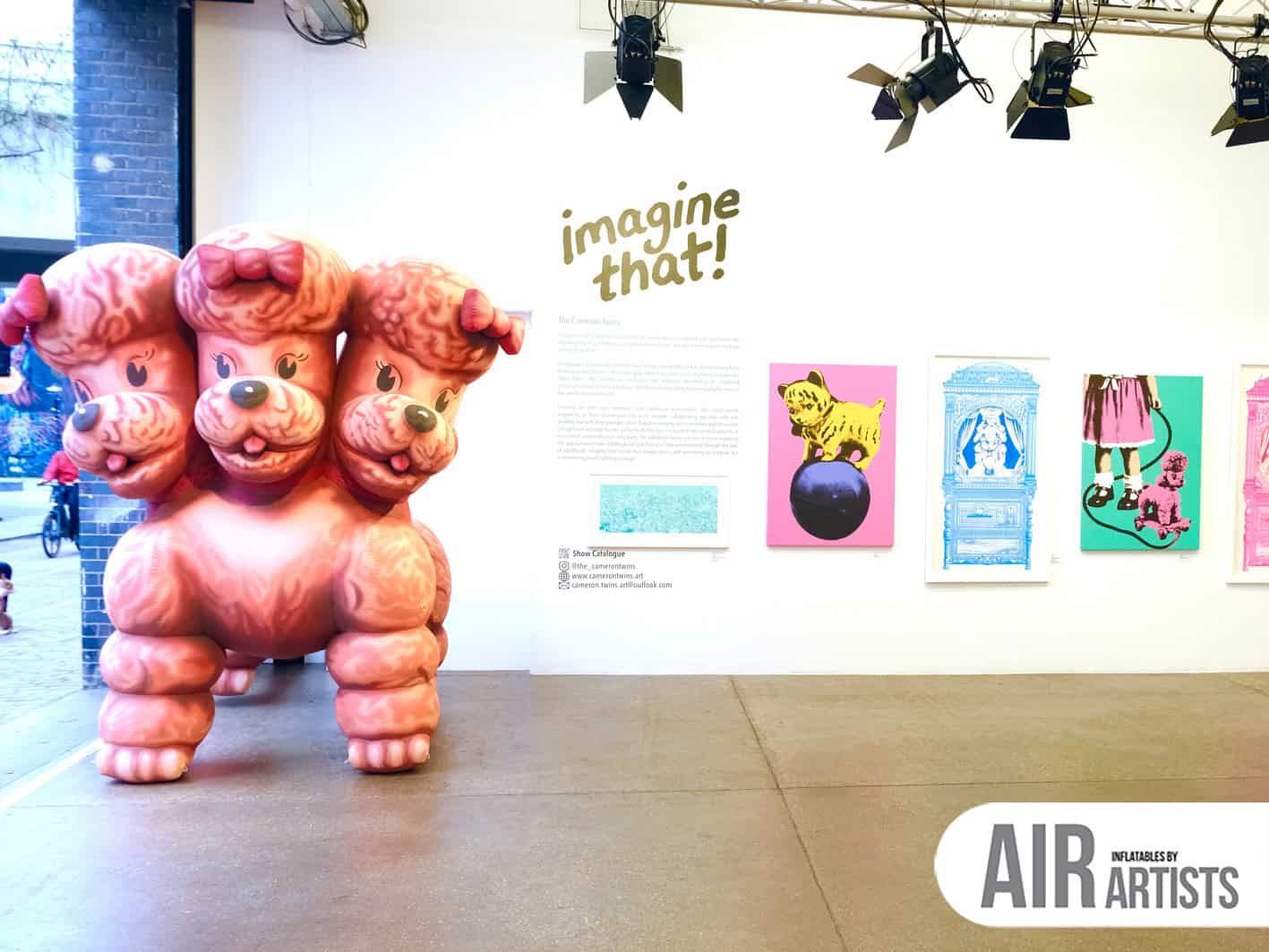
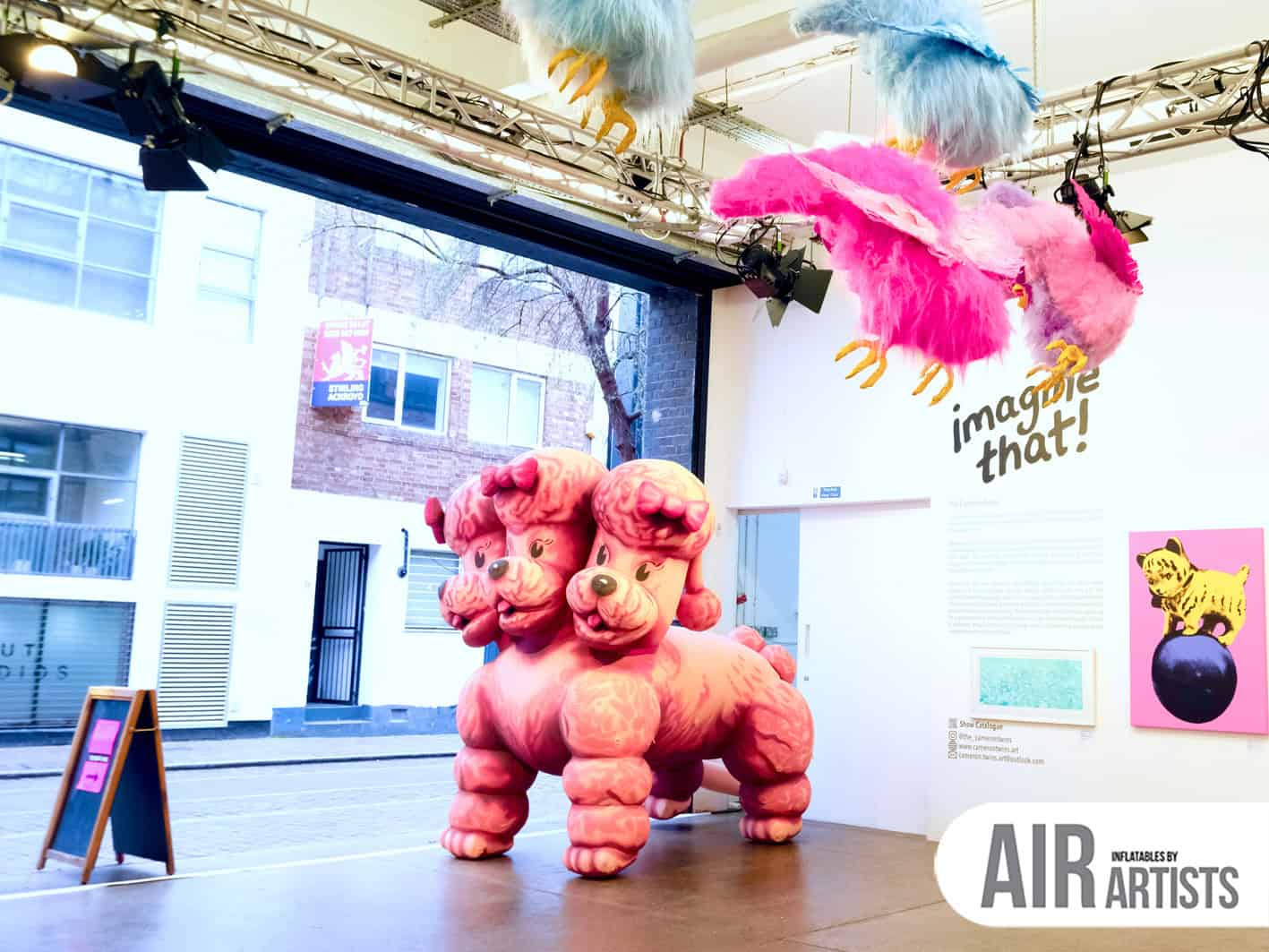
The Cameron Twins project took a different route. Air Artists translated a two-dimensional illustration into a large three-dimensional inflatable sculpture for the Imagine That! exhibition, showing how an artist-led idea can become the campaign experience itself rather than conventional advertising.
Case Study 04
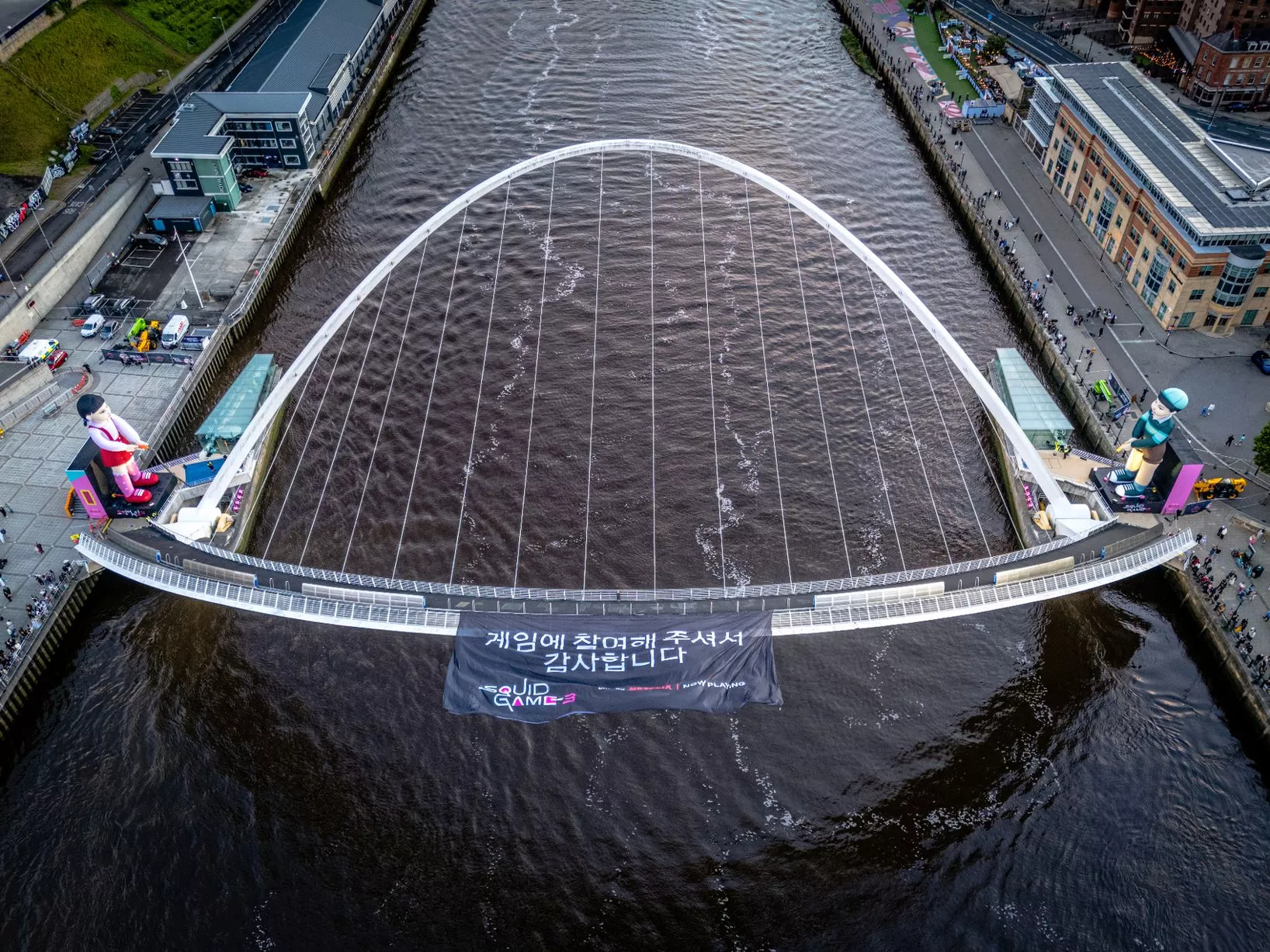
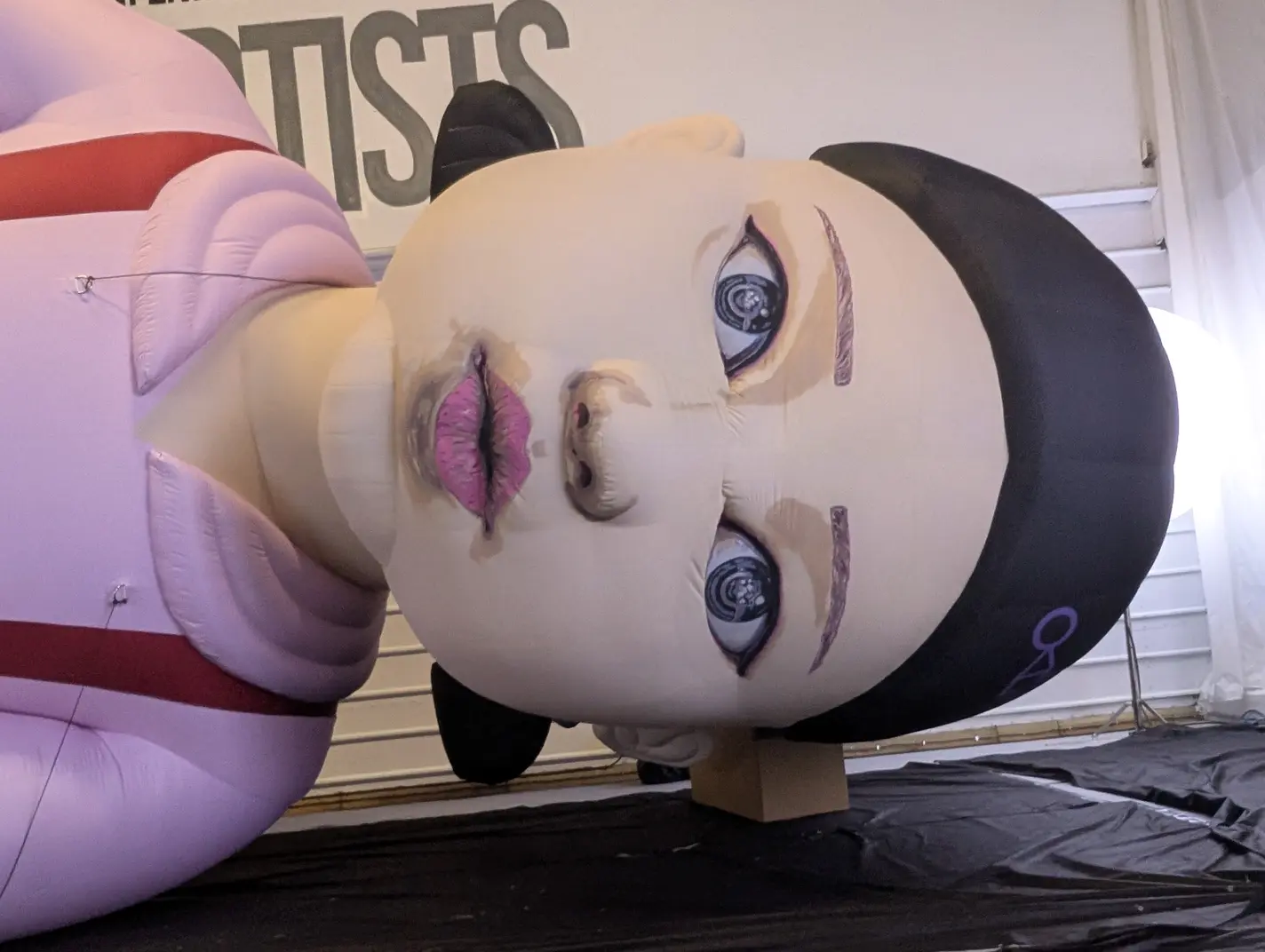
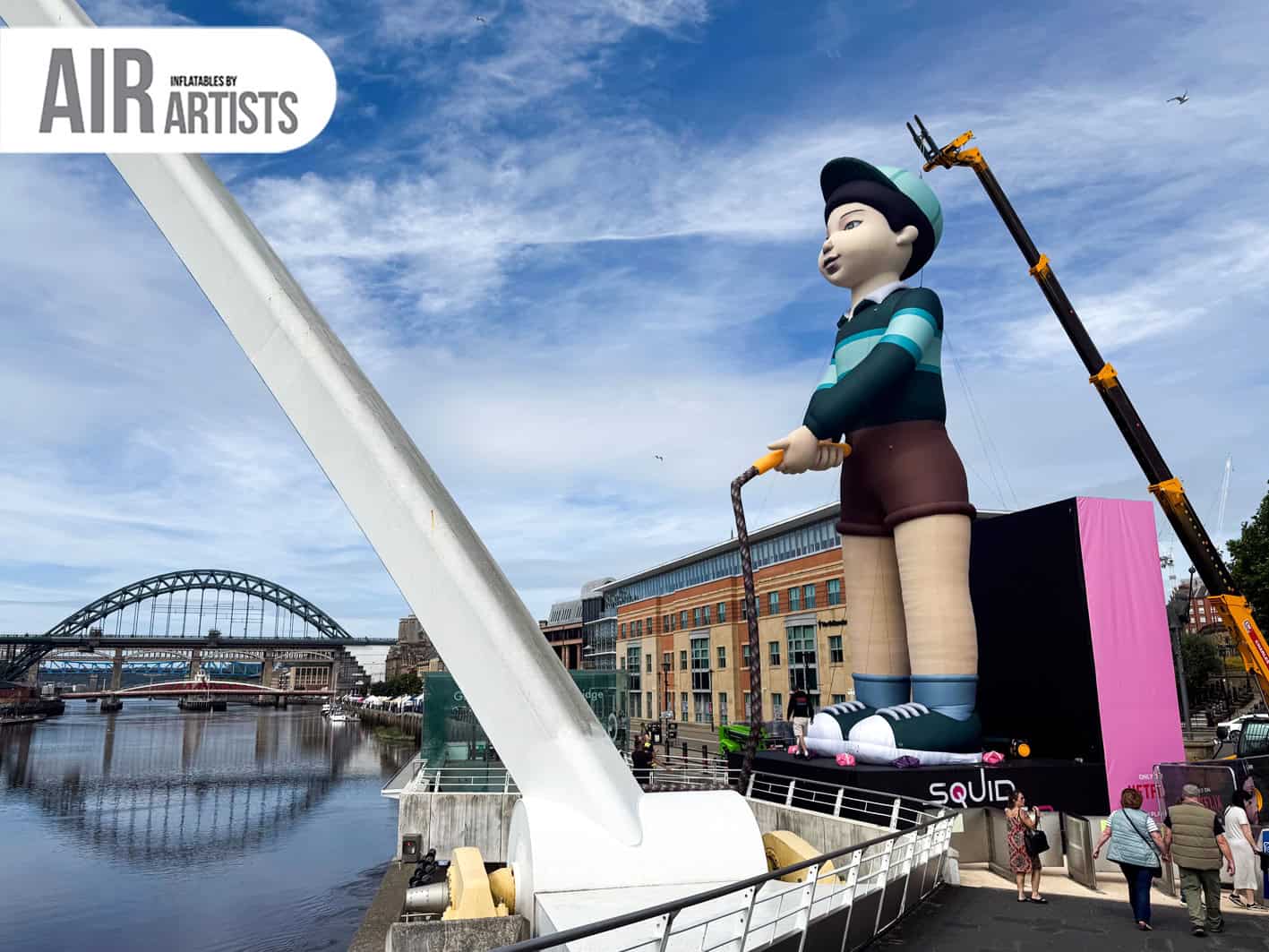
For Netflix’s Squid Game, Air Artists created monumental hand-painted inflatables for a public-facing activation in Newcastle. The familiar characters became far more striking when moved out of the screen and into a real city environment.
Guerrilla marketing can be a powerful way to make a campaign feel more memorable, particularly in creative industries, live events and public-facing activations where the environment can become part of the idea. The strongest concepts give people something genuinely unexpected to encounter, photograph or talk about.
For brands looking to create that kind of impact physically, a bespoke inflatable can turn a campaign concept into something people can experience at scale. If you are planning an activation, event or installation and think this approach could work for your brief, get in touch with Air Artists to discuss the idea.
If you have a campaign, event or installation in mind, share the brief below and the Air Artists team can discuss what is possible.